
- About
-
-
- The Shaar
-
-
- Prayer
-
-
- Media
-
-
-
- Life
-
-
- Lifecycle
Events
-
-
- Venues
-
-
-
-
- Community
-
-
- Adult Engagement
-
-
- Youth and
Young Families
-
-
- Tikkun Olam
-
-
-
-
- Music
-
-
- SH’MA
-
-
-
- Learning
-
-
- Adult Education
-
-
-
-
- Calendars
-
-
- Calendar
-
-
-
- Daily Services
- eNewsletter Sign-Up
- My Account

Message from Rabbi Adam Scheier

Dear Friends,
It’s a remarkable statement to make: Congregation Shaar Hashomayim has reached the venerable age of 180 years old. The number is astounding, and rare in a world of global instability and Jewish migrations of the past centuries. The longevity of our congregation is a testament to the enduring spirit of dedication and renewal exhibited by generations of members, leaders, clergy, and staff.
Our reaching this stage reflects a truth that can inspire spiritual growth, as well. In 1846, a small group of Jews rented a space for $10 a month. The original location was at the corner of St. James Street and St. Gabriel; that intersection no longer exists as a street, as it is located on the grounds of today’s Palais de Justice. In the year of our founding, the entire Jewish population of Montreal numbered roughly 200 people; the original dream of that handful of Jews was to create a community that reflected their religious pedigrees, as English, German, and Polish Jews. That idea grew, transformed, adapted, and snowballed into today’s vibrant Shaar, which thousands of Jews call their spiritual home.
A lesson in this growth is that one never knows how far an idea or an initiative will grow; a small act, gesture, or idea can have a great impact.
This idea is central to Rosh Hashana. As Maimonides teaches, our approach this time of year should be to see the scales of mitzvot and sins as being completely balanced – there is no indication of which way will prevail in the world’s judgment. The only possible approach, then, is to try to add weight to the side of mitzvot. The very act of performing a minor mitzvah just might save the world.
Someone once asked the great 20th century sage Rav Yisrael Meir Kagan (the Chofetz Chaim) about how he was able to impact the Jewish world. He answered, “Originally, I set out to change the world, but I failed. I then decided to only influence the Jewish community of Poland, but I failed there, too. I then focused my efforts on my hometown (Radin), but didn’t succeed there either. Then I tried to change my family, but also failed. I then turned my focus to myself, and finally, I succeeded.” In other words, to change the world, one begins with a small action that might only impact oneself.
The visionaries who founded our community 180 years ago might never have imagined the heights their initiative would reach, but we are grateful that they planted the seeds that led to our beloved Shaar of today.
May we learn from their example, and may our year be filled with many mitzvot, big and small.
Abby, Aviya, Ayelet, Annael, Allegra, and Arella join me in wishing our Shaar family a Shana Tova u’metuka!
Rabbi Adam Scheier
Message from the President Mara Greenstone Agulnik
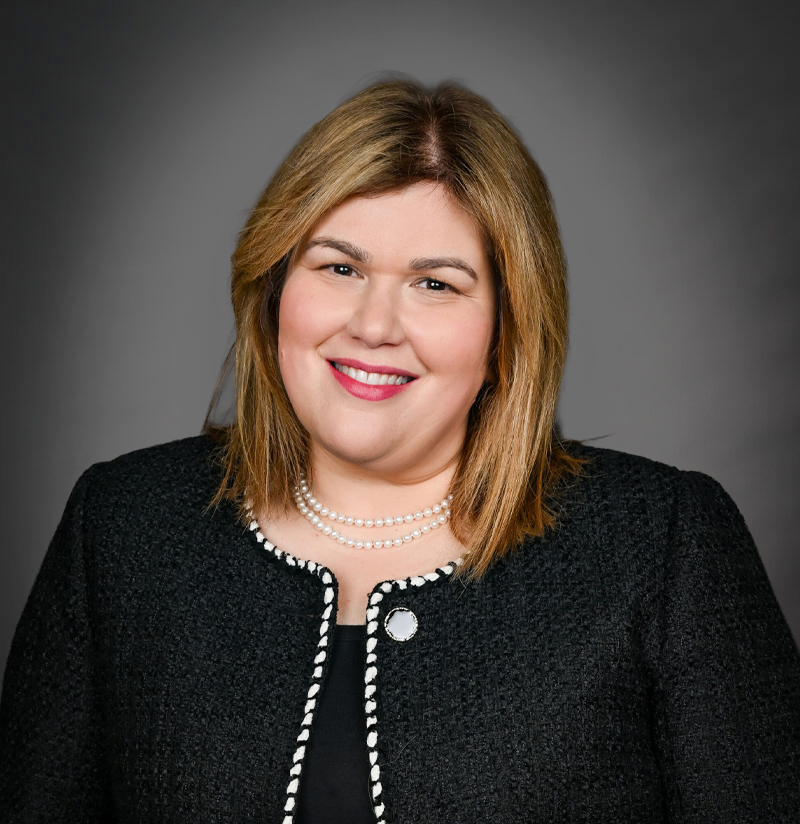
Dear Friends,
As I celebrate my first High Holy Days as President of Congregation Shaar Hashomayim, I am filled with pride and excitement for all that lies ahead. I feel especially fortunate to serve our community at this remarkable moment, as we celebrate 180 years of the Shaar.
For nearly two centuries, generations have passed through our doors to pray, learn, celebrate, mourn, raise their families, and build community. We are the beneficiaries of all they created, and as we honour that history throughout this anniversary year, we also look ahead with tremendous excitement to the Shaar’s future.
That future is already taking shape. This High Holy Day season, we are offering more ways than ever to find meaning and connection. Alongside our beloved Main Sanctuary services, Shaar Orot offers a vibrant and participatory approach to prayer, song and learning, while our new Sephardic Service brings the richness of Sephardic tradition to our community. Our Family Experience continues to create a warm and engaging place for children, parents and grandparents to celebrate together.
The energy extends far beyond the High Holy Days. From adult learning and Hebrew classes to programs for young families, teens and young professionals, from music and culture to opportunities to gather, volunteer and care for one another, there is an extraordinary amount happening at the Shaar. I hope you will explore the pages of this booklet, try something new, and find your own way to be part of it.
Our 180th anniversary is an opportunity not only to celebrate where we have come from, but to consider where we are going. How do we preserve what is most precious about our traditions while continuing to evolve, welcome and inspire? I am proud to be part of a community approaching these questions with deep respect for our past and ambition for our future.
None of this would be possible without the remarkable people behind it. I am deeply grateful to Rabbi Scheier and our clergy, our professional team, my fellow officers and trustees, and the many volunteers who give so generously of their time and talents.
I also extend my sincere gratitude to our Past President, Joseph Paperman, for his outstanding leadership over the past three years and, personally, for his continued guidance, support and commitment. I am grateful to have his experience and partnership as we move forward.
My heartfelt appreciation also goes to Penni Kolb, who will retire as our Executive Director this fall after an extraordinary 23 years of service. Penni’s leadership and deep commitment have helped shape the Shaar in countless ways, and we are enormously grateful for all she has given to our community.
As we enter 5787 and begin this historic anniversary year together, I do so with enormous pride in what the Shaar has been, excitement about what it is today, and great optimism for what lies ahead.
May the coming year bring peace to Israel, strength and security to Jewish communities everywhere, and health, happiness and sweetness to all of our Shaar families.
Shanah Tovah u’Metukah
Mara Greenstone Agulnik
Message from Rabbi Yehoshua Ellis

Shanah Tovah. Happy New Year.
According to our tradition, 5,787 years ago, God began creating the world. On the sixth day, God created man – and it is this day that we commemorate on Rosh Hashanah.
But why do we mark the sixth day of Creation, rather than the first, as the beginning of the year?
Our tradition teaches that the world was created for humanity, and that Creation was therefore not complete until human beings became part of it. But that raises another question: if humanity was the purpose of Creation, why didn’t God create us first?
The Midrash Rabbah adds another fascinating dimension. It tells us that before creating the world we inhabit, God created and destroyed countless other worlds. Why would the Rabbis share this detail with us? If nothing remained of those earlier worlds, what difference does it make that they ever existed?
Perhaps something did remain: experience.
Those earlier worlds—their creation and their destruction—were part of the process that led to ours. Creating a world, it seems, is difficult work. Even a world created from nothing had something that came before it: the lessons learned along the way.
And perhaps that helps us understand why Rosh Hashanah begins not on the first day of Creation, but on the sixth.
A new year does not ask us to begin from nothing. We bring something with us. We carry the experiences, lessons, relationships and choices of the year that came before. We say “Happy New Year,” but perhaps what we really mean is “Happy Renewed Year.”
That is the work before us this Rosh Hashanah: deciding what from the past year – and from all the years before it – we need to leave behind, and what is worth renewing, strengthening and carrying forward.
That feels especially meaningful at the Shaar this year. As we celebrate 180 years, we are entering a year filled with new possibilities. And yet none of them begins from nothing. They are built upon 180 years of prayer, learning, community, tradition and the generations who came before us.
This will be my family’s and my second Rosh Hashanah as part of the Shaar family, and there is still so much for us to learn, discover and share. The same can be said of the Shaar itself. Even after 180 years, there are new avenues to explore, new ways to connect and new ways to express our Jewishness. We have an extraordinary future ahead of us—but reaching it sometimes requires being willing to let go of the worlds that came before.
As Rosh Hashanah approaches, I want to bless all of us with a year of renewal and reinvention. May we be brave enough to let go of what no longer serves us, wise enough to hold on to what does, trusting enough to accept sincere forgiveness, and honest enough to recognize where we ourselves need to change.
An extraordinary year lies ahead, and there is nowhere I would rather enter it than here, together with all of you at the Shaar.
Rabbi Yehoshua Ellis
Message from the Ritual Director Yosi Even-Hen

Dear Friends,
The High Holy Day period brings with it many unique rituals and traditions. We hear special melodies and cantillation for both our tefilot and Torah readings. We eat symbolic foods and recite the blessings that accompany them. But perhaps the most distinctive – and powerful – symbol of Rosh Hashanah, one that is biblically commanded, is the shofar.
As the first day of Rosh Hashanah falls on Shabbat this year, we will hear the shofar only on the second day of Rosh Hashanah.
The shofar serves, first and foremost, as a kind of spiritual alarm – calling us to wake up, reflect, and begin the work of teshuvah, repentance. Its piercing, almost crying sound helps put us in the frame of mind to look inward and consider where and how we need to change.
No two shofars are exactly alike. Each has its own shape, markings and character. Some are large, others small; some heavy, others light; some dark, others fair. And each produces its own distinctive sound – some deep and resonant, others higher and more piercing.
Perhaps there is another lesson in this. Just as every shofar is unique, so too is every one of us. We each come before God with our own voice, our own needs, our own hopes and our own prayers. Our individual call to God is uniquely ours.
As we hear the shofar this Rosh Hashanah, I pray that each of our individual prayers is heard and answered. May we learn to appreciate and be sensitive to the uniqueness of those around us. May we all be inscribed in the Book of Life, and may the year ahead bring sweetness, health and peace to us all.
Shana Tova U’metukah
Yosi Even-Hen
Message from the Music Department


# A New Year, and 180 Years of Song
180 years! 10x Chai of prayer, of community, and of music that has carried this congregation from one generation to the next. It is a milestone that invites gratitude for all we have inherited, and no small measure of ambition for what we build next. The 2026-2027 season of SH’MA programming ahead reflects that spirit.
On November 19, we are honoured to welcome the Jerusalem Baroque Orchestra together with Montreal’s Ensemble Caprice to our sanctuary — an evening of period-instrument brilliance in a room that was built for exactly this kind of sound. It is the first of several musical offerings we look forward to sharing with you in the months to come.
A Night @ the Opera will also resume once the Fall Festival season has drawn to a close.
And please, mark your calendars now for Monday, April 5, 2027, when we will celebrate our 180th anniversary in the grandest way we know how. Continuing a tradition that began with our 140th anniversary, the Orchestre symphonique de Montréal, under the baton of Maestro Rafael Payare, joins us for a concert featuring Bruch’s Kol Nidrei performed by the extraordinary cellist (and wife of Maestro Payare) Alisa Weilerstein, and Haydn’s monumental oratorio The Creation. It promises to be an unforgettable night in the life of our congregation.
From my family to yours, I wish everyone a healthy and happy 5787!
Cantor Gideon Zelermyer
Message from Rav Yitzchak Chetrit
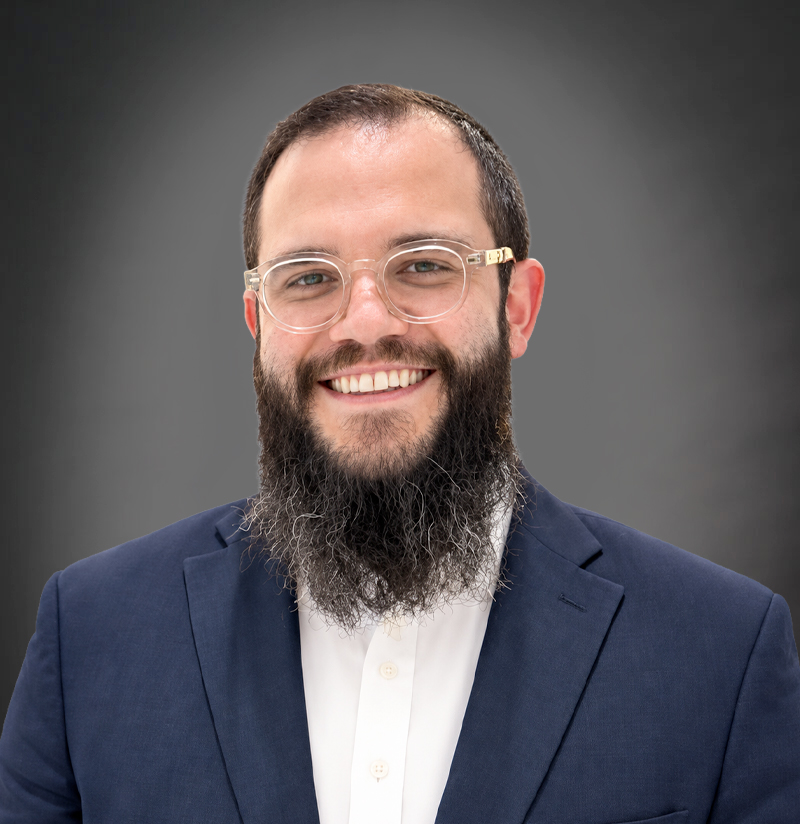
B”H
Kahal Kadosh,
When we think about the beginning of our holidays, many are marked by a defining act. On Sukkot, we enter the sukkah; on Pesach, we begin the Seder; and on Yom Kippur, we usher in the holiest day of the year with Kol Nidrei.
Rosh Hashanah is different. The first night begins one of the most important periods of the Jewish year, yet there is no single dramatic ritual to mark its arrival. Instead, our sages gave us something more subtle: the simanim, the symbolic foods we place on our tables.
The Talmud teaches that a siman – a sign or symbol – has significance, and names several foods that should be eaten at the beginning of the year, each representing a blessing we hope for in the year ahead. Over time, Jewish communities added their own customs, most famously the apple dipped in honey.
But perhaps the apple represents more than our hope for a sweet year.
The Talmud compares the Jewish people to an apple tree because, according to its metaphor, the fruit appears before the leaves. So too, at Sinai, the Jewish people declared “Na’aseh v’nishma” – “We will do and we will hear.” Action came before understanding.
There are moments in life when we cannot wait until everything is perfectly understood, every possibility analyzed, and every uncertainty resolved. Sometimes we simply need the courage to take the first step. Judaism values careful thought and wise deliberation, but there is also a danger in allowing uncertainty to prevent us from moving forward. We need to know when to listen and when to say, “Na’aseh” – we will do.
This message feels especially meaningful at the Shaar this year. As we celebrate our 180th anniversary, we are also marking the establishment of the first Sephardic minyan in the Shaar’s history. Even after 180 years, there are still new ideas to pursue, new traditions to build, and new ways for our community to grow.
Creating something new requires initiative. Sustaining it requires commitment. And growing it requires people willing not only to ask what can be done, but to stand up and say, “Na’aseh” – let us do it.
This Rosh Hashanah, may the apple on our table remind us not only to wish for a sweet year, but to help create one. May we have the wisdom to know when to listen, the courage to act and the faith to take that first step.
May Hashem bless us, our families and our entire community with a year of sweetness, joy, health, growth and besorot tovot.
Shanah Tovah U’Metukah!
Rav Yitzhak Chetrit