- About
-
-
- The Shaar
-
-
- Prayer
-
-
- Media
-
-
-
- Life
-
-
- Lifecycle
Events
-
-
- Venues
-
-
-
-
- Community
-
-
- Adult Engagement
-
-
- Youth and
Young Families
-
-
- Tikkun Olam
-
-
-
-
- Music
-
-
- SH’MA
-
-
-
- Learning
-
-
- Adult Education
-
-
-
-
- Calendars
-
-
- Calendar
-
-
-
- Daily Services
- eNewsletter Sign-Up
- My Account

Elliott Shuchat - Chatan Torah
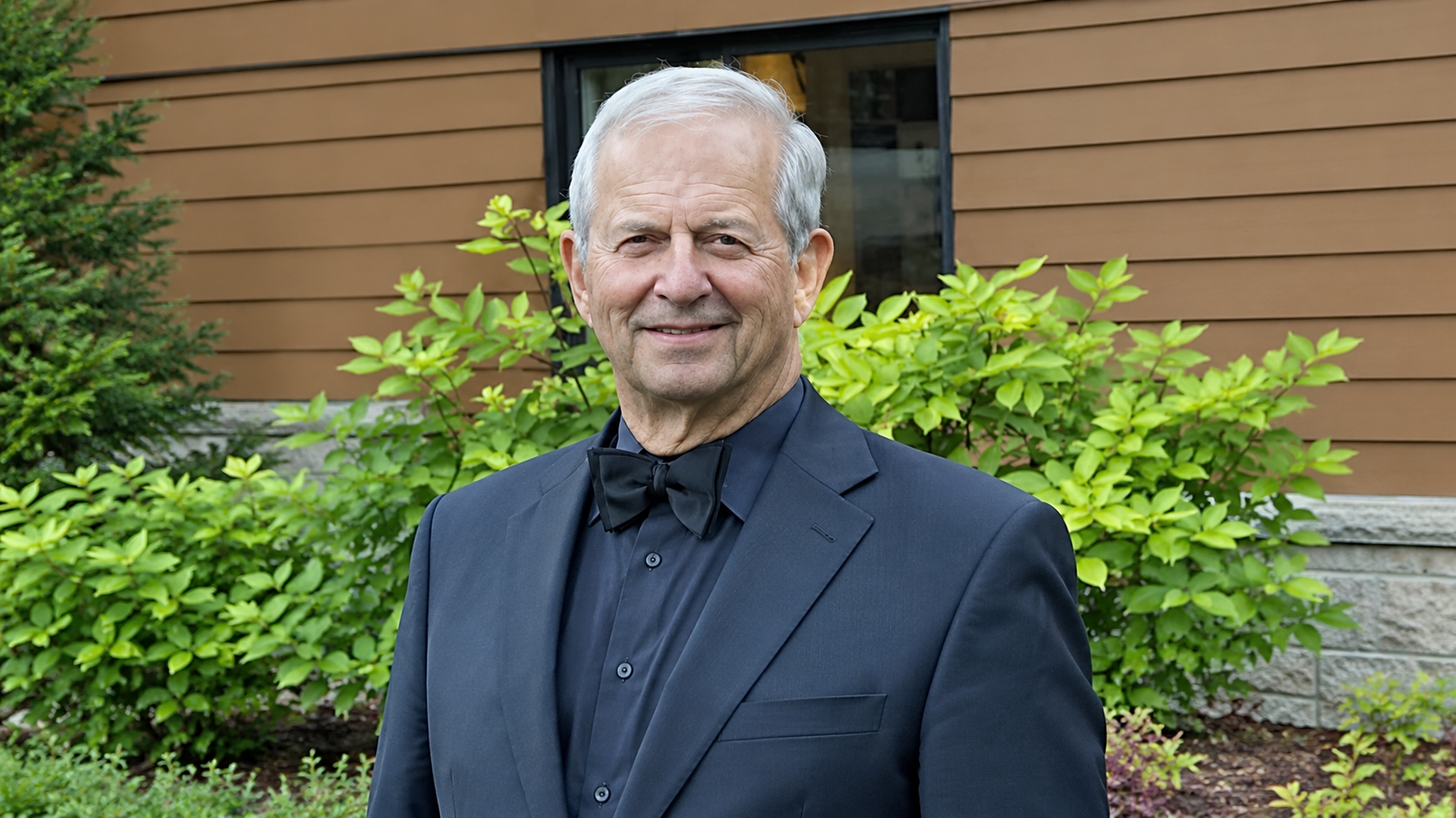
I am deeply honoured to be named Chatan Torah this year, and especially grateful to share this Simchat Torah celebration with my fellow honourees, Malvina Klag, our Eishet Chayil, and David Sochaczevski, our Chatan Breishit.
To receive this honour at the Shaar, a place that has been part of my life for as long as I can remember, is incredibly meaningful. Among so many worthy members of our congregation, I see this recognition not as a reflection of greatness or achievement, but perhaps of what we stand for and the ways in which we choose to be part of this community.
My connection to the Shaar began almost at birth. I attended nursery here and Talmud Torah Hebrew school. I spent my childhood sitting in the front row with my father and my grandfather Meyer, listening to the music of Cantor Mendelson and Choir Director Professor Rosemarin. I am from the era of Sam Lerner and Mr. Glustein, and I learned to put on tefillin with Mr. Lieff.
When it came time for my Bar Mitzvah, I learned my portion by using the sheet music and my accordion to learn the notes of the trope. Then for years there was Junior Congregation , and later on I served on the Board of Directors for many years, under several presidents.
But perhaps the most important Jewish lesson I learned growing up came from my father, Seymour, and his extraordinary dedication to Kaddish.
For two years, while mourning his parents, my father was late for or absent from meals because he was committed to saying Kaddish twice a day at the synagogue. I sometimes accompanied him, and I can still remember seeing him rushing to the Shaar late in the afternoon to make sure he was there for the minyan.
Years later, when my parents, Joan and Seymour, passed away very close together, I found myself coming to daily services at a relatively young age. With the support of the late Joel Riven and George Klein, and with the help and encouragement of David Woolfson, I also began leading services regularly. I knew about the sense of duty , but was unaware initially that our mourning rituals would bless us with an afterglow when the 11 months were up.
There is something profoundly beautiful about the Jewish way of mourning.
You are not alone. Day after day, you stand with others who are experiencing loss, alongside people who may not be mourning at all but who come simply to ensure that there is a minyan. Over those eleven months, strangers, both men and women, become familiar faces, and familiar faces become friends. There is comfort in knowing that people are expecting you and that you are, in turn, needed by them.
The minyan gives structure to grief. It gives us somewhere to go, something to do, and people with whom to stand. Slowly, almost without realizing it, that sense of duty becomes a source of comfort, connection, and purpose.
For those of us who attend services, the most emotional times are when a mourner completes the eleven months of reciting kaddish. The presentations they make to the attendees on that final day, describing their personal experience of going through the process and how it changed or affected them, are truly heartwarming. There is an extraordinary sense of community in the room. We have accompanied someone through a chapter of their life, just as others once accompanied us through ours. I always try to be there for those mornings.
After my own experience of mourning, I became part of a small group from the Shaar that would go into the homes of newly bereaved families and help conduct shiva services. COVID changed much about the way those services were conducted, and today I concentrate much of my effort on our daily minyan at the Shaar.
There is a line in the final chapter of the Torah, which I will have the privilege of reading on Simchat Torah, describing Moses as the prophet whom God knew “face to face.”
That phrase has stayed with me.
Our parents bring us into this world and help shape us into the people we become. Eventually, the time comes for us to return that honour and to carry forward what they gave us.
We must look in the mirror, and see ourselves, face to face, and yes, we can do it.
In many ways, that has been the story of my life at the Shaar.
Outside the synagogue, I completed my B.Com. at Sir George Williams University and spent much of my career in our family fur business before moving on to other pursuits. But music has always been a constant. From the accordion to playing drums in a university band, I eventually fell in love with the haunting sound of the organ. Today, I play rock organ in three bands and have spent the past 23 years helping promote, fundraise, and play for the Donald Berman Maimonides Battle of the Bands, an institution particularly close to my heart as my late mother once served as president of its foundation.
I sometimes think there is a connection between the organ and the minyan.
In a band, the organ is not always the sound you notice first. It is the water that fills the spaces. It supports everything around it. It is, in a sense, what holds the music together.
That is what our regular morning and evening minyan does for our congregation.
Quietly, faithfully, day after day, it holds us together.
At university I was introduced to the Hillel organization, and it is there that I met my wife Sheryl.
We have three grown children: Joni and Jennifer in Montreal and our son Joel, who divides his time between Bali and Beijing.
I once asked Rabbi Shuchat why the Simchat Torah honourees do not fill out some sort of role for the duration of the year
He said it would be a wonderful idea.
This unexpected honour at Shaar Hashomayim, my other home, means a lot to me as it is what I call a homecoming.
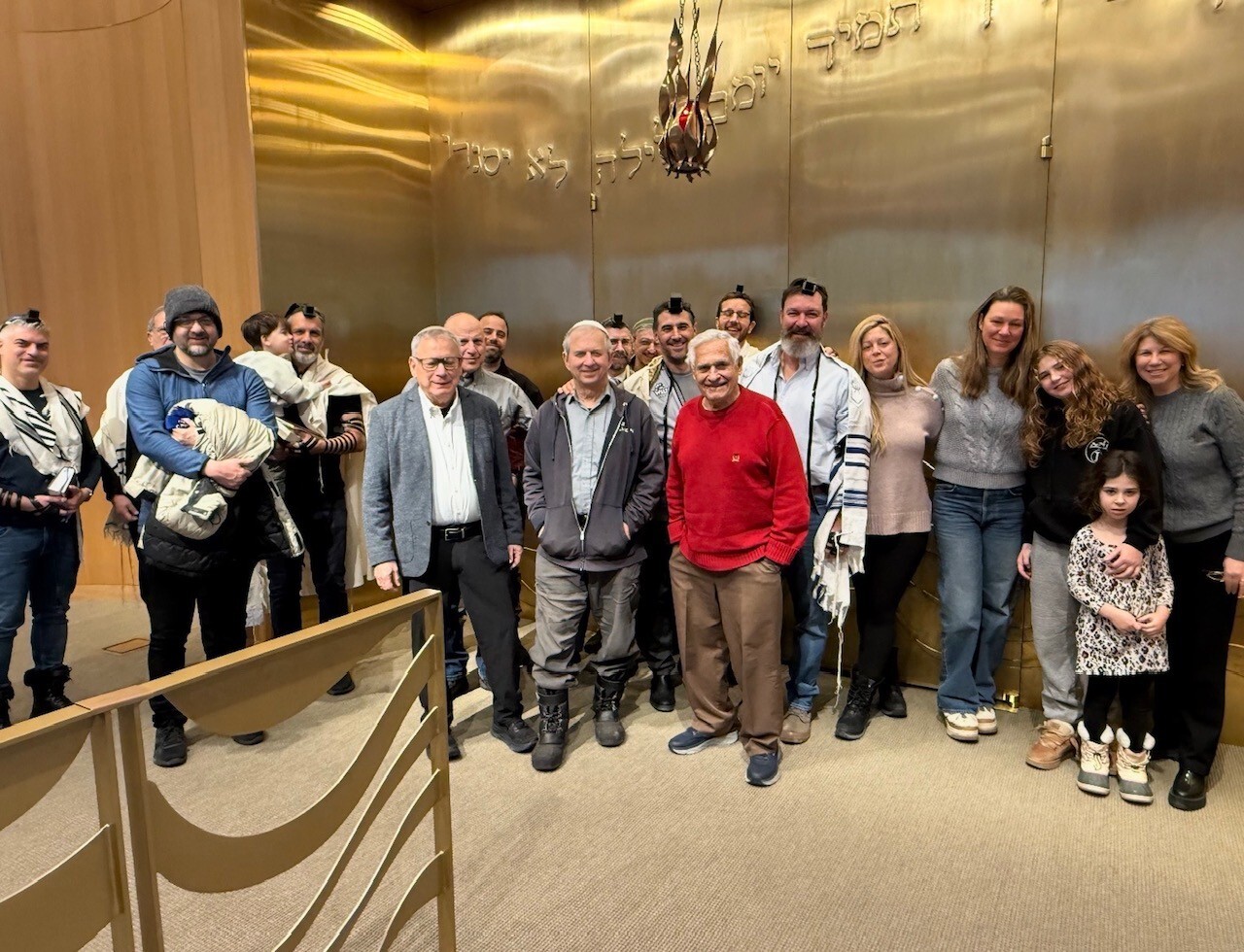
Both your Chatan Torah, and David, our Chatan Breishit, are here before, during, and after services on a pretty regular basis, so in a way I am answering my own question to Rabbi Shuchat.